How to Shock a Pool Safely (and When You Need To)
Combined chlorine, the 10x rule, steps and chemical safety, from public-health sources.
Quick answer
Shock a pool when combined chlorine (total chlorine minus free chlorine) climbs. Indiana's health division recommends shocking at 0.2 ppm or higher, and public-pool rules there require it at 0.5 ppm or higher (Indiana DOH). Breakpoint is reached when the free chlorine added is about ten times the combined chlorine. Follow the product label, and never mix chemicals.
Jump to section
What "shocking" means (breakpoint)
Shocking a pool means adding enough chlorine to get past a point called breakpoint. Breakpoint is the point where enough chlorine has been added to deal with the combined chlorine. The Indiana Department of Health says breakpoint is reached when the free chlorine added is about ten times the combined chlorine (Indiana DOH).
A note on the source. The Indiana sheet is written for public pools under Indiana rules. We present its thresholds as public pool rules that are useful guidance at home. Your own pool is not covered by those rules, and your product label always comes first.
When to shock: combined chlorine
The trigger is combined chlorine, not a calendar. Indiana rules require public pools to shock when combined chlorine is 0.5 ppm or higher. The state's health division recommends shocking at 0.2 ppm or higher (Indiana DOH).
Do not guess from the look or smell of the water. Test, and let the numbers decide. The two thresholds above are the numbers to compare with, and the DPD kit is how you get them.
Measuring combined chlorine (TC − FC)
Combined chlorine equals total chlorine minus free chlorine, measured with a DPD test kit (Indiana DOH). You need both readings, so choose a kit that reports total chlorine as well as free chlorine. Our guide to the best pool test kits shows which kits do.
If total chlorine reads higher than free chlorine, the difference is your combined chlorine. Compare it with the 0.2 and 0.5 ppm thresholds above.
The CDC adds that a DPD kit is the most accurate option and strips are less accurate (CDC). For shocking decisions, accuracy matters, so use the DPD kit if you own one.
How much: the 10× rule
The rule of thumb is simple: add free chlorine equal to about ten times your combined chlorine. Indiana also gives a dose formula for 12% liquid chlorine, which assumes the pool starts at 0.0 ppm free chlorine:
That example is for a large public pool. Home pools are far smaller, so scale the answer to your own pool's gallons and read your product's label before you pour anything. The label's directions override any formula.
Adding too little chlorine makes chloramines worse, which Indiana calls "all or nothing". Add the chlorine all at once so the whole pool reaches breakpoint (Indiana DOH).
Step by step
- Test free chlorine and total chlorine with a DPD kit, then subtract free from total to get combined chlorine.
- Decide whether to shock. Indiana recommends shocking at 0.2 ppm combined chlorine or higher.
- Choose a product that is not stabilized chlorine. Do not use dichlor or trichlor to shock, because the cyanuric acid builds up (Indiana DOH).
- Work out the amount from the label and from the 10× rule. Wear the protective gear the label lists.
- Close the pool to swimmers, then add all the chlorine at once.
- Keep the pool closed and retest until free chlorine falls back to an acceptable level.
- Write down the readings and what you added.
Chemical safety: never mix, protective gear, storage
Pool chemicals cause real injuries. The CDC estimated 4,535 US emergency department visits a year from pool chemical injuries in 2008 to 2017. In its closer look at 2015 to 2017, 36% of the injured were children or teens, 56% of injuries happened at home, and the top diagnosis was poisoning from breathing fumes, vapors or gases, for example when opening chlorine containers (CDC 2019).
The CDC's advice is plain. Follow product labels, wear the protective gear the label lists, store chemicals away from children and pets, and never mix chemicals (CDC 2019).
Keep a short log of each shock: the date, the free and total chlorine before, what you added and the readings after. A log makes the next decision easier, because you can see how quickly combined chlorine returned and whether your routine needs a change.
When it is safe to swim again
The pool stays closed during breakpoint chlorination and until free chlorine falls back to an acceptable level. If you use a non-chlorine oxidizer instead, close the pool for at least 1 hour, or longer if the label says so (Indiana DOH).
An "acceptable level" is the CDC's target for a home pool: free chlorine of at least 1 ppm and a pH of 7.0 to 7.8, or at least 2 ppm if the pool uses cyanuric acid (CDC). Our pool chemistry guide puts those numbers in one table.
Fixing a green pool
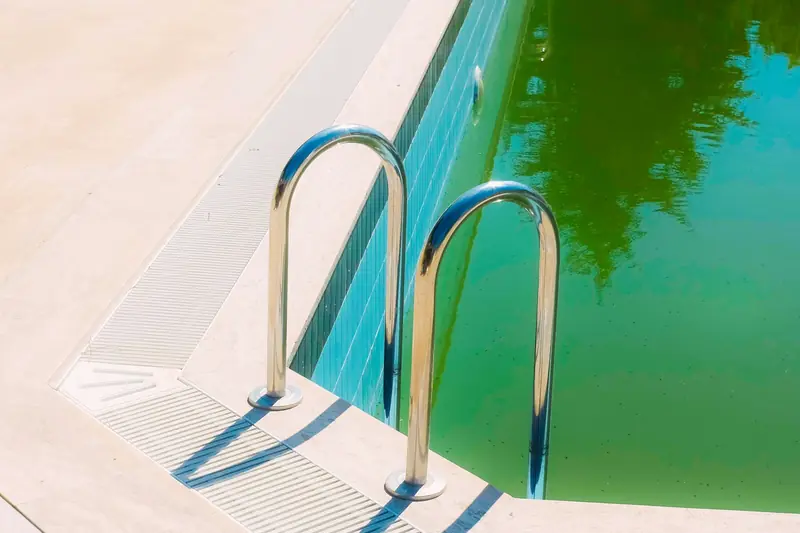
Green water is an algae problem, and algae is a chemistry problem, so a cleaner will not fix it. Shock the pool first using the steps above, then vacuum the dead algae out.
For the cleanup, a robot or vacuum rated for above-ground pools can clear the dead algae afterward. For a spa or a small pool, a cordless pool vacuum is a quick option. Neither tool kills algae. Both only remove it after the shock has done its work.
If the water is still green after the shock, retest with your DPD kit, which our pool test kit guide explains how to choose, and read the label again before you add anything more. Do not combine products to speed things up, because the CDC says never to mix chemicals (CDC 2019).
Gear that helps
-
Best Pool Test Kits and Test Strips
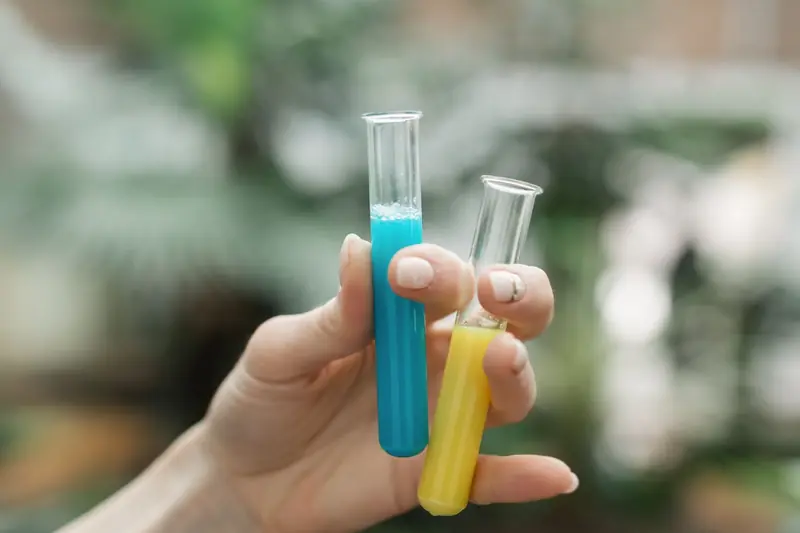
A DPD kit gives you the free and total chlorine readings you need to work out combined chlorine.
-
Best Above-Ground Pool Vacuums and Robot Cleaners
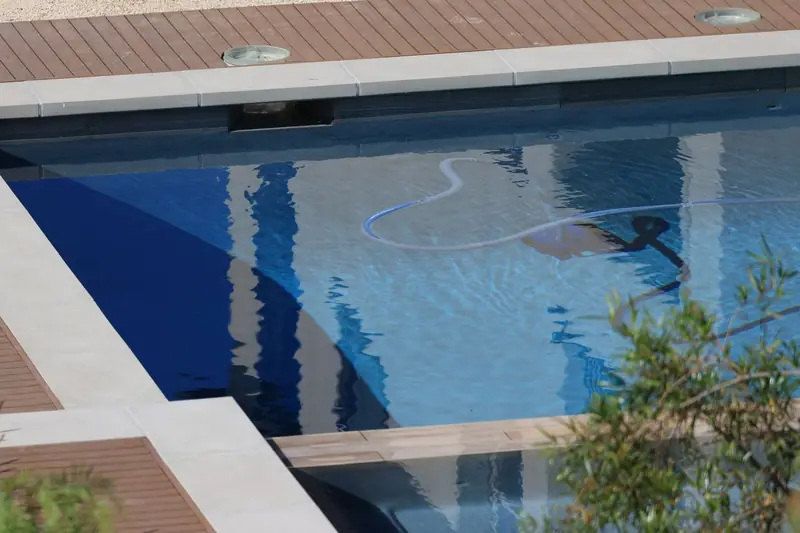
After a green pool is shocked, a robot or vacuum rated for your liner clears the dead algae.
-
Best Cordless Pool Vacuums (Handheld and Pole)
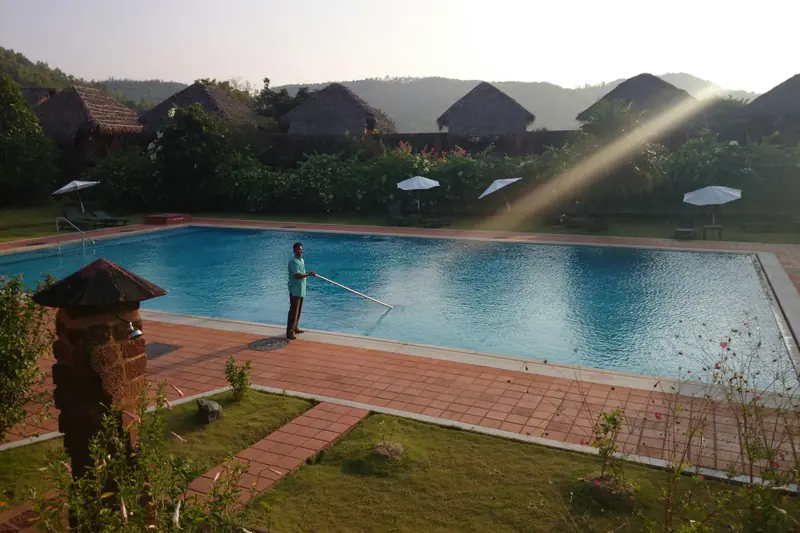
A cordless vacuum is a quick tool for picking up dead algae from a small pool or spa.

FAQ
Can I shock with dichlor or trichlor?
No. The Indiana Department of Health says not to shock with stabilized chlorine (dichlor or trichlor), because the cyanuric acid builds up (Indiana DOH).
Why does my test read zero after I shocked the pool?
Above 10 ppm the chlorine test can bleach out and read falsely low, so a zero right after shocking may be wrong (CDC).
What if I add too little chlorine?
Too little makes chloramines worse. Add the chlorine all at once so the whole pool reaches breakpoint (Indiana DOH).
Related
-
Buying guide
Best Pool Test Kits and Test Strips
DPD kits, strips and digital testers, compared on what they measure.
-
Buying guide
Best Above-Ground Pool Vacuums and Robot Cleaners
Liner-safe robots and vacuums for frame and vinyl pools, compared on specs.
-
Buying guide
Best Cordless Pool Vacuums (Handheld and Pole)
Runtime, debris capacity and pole fit for quick spot cleaning.
-
Buying guide
Best Robotic Pool Cleaners for Inground Pools
Pool size rating, coverage, power and filtration, side by side.
-
Guide
Pool Chemistry for Beginners: The Numbers That Keep Water Safe
The CDC chlorine and pH targets for pools and hot tubs, plus a weekly routine.
-
Guide
How to Winterize an Above-Ground Pool in 8 Steps
Balance, shock, clean, lower the water, pump, air pillow and cover, in order.

Get the weekly pool and hot tub checklist
A one-page printable checklist with the CDC water targets and the safety checks to run every week. Free, and sized to stick on the pool shed door.