
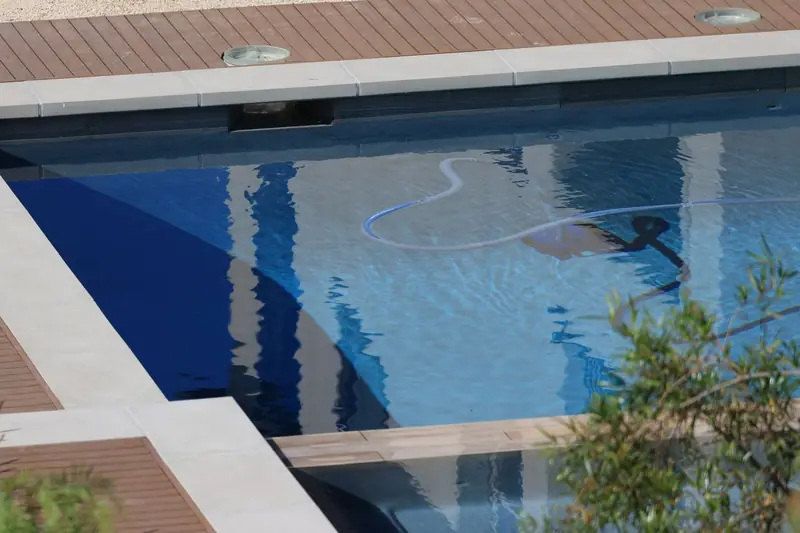
Robotic vs Suction Pool Cleaner: Which Is Worth It?
A robotic cleaner works on its own power and filter. A suction cleaner uses your pool pump to pull itself around and sends debris to your pool's filter. Which suits you depends on your pump, your filter and how much of the pool you want cleaned.
Robotic cleaner: the better choice if…
- You want a cleaner that does not rely on your pool pump.
- You want debris collected in a filter you empty by hand.
- You would like walls and waterline cleaned, where the model supports it.
Suction cleaner: the better choice if…
- You have a pump and filter you trust and want a simpler cleaner.
- You prefer a cleaner with few electronics to maintain.
- Your pool is above-ground and a model is rated for vinyl liners.
Jump to section
At a glance
| Point | Robotic cleaner | Suction cleaner |
|---|---|---|
| Power source | Its own motor | Pool pump suction |
| Where debris goes | Onboard filter | Your pool filter |
| Wall and waterline cleaning | Varies by model | Varies by model |
| Pump run time needed | Pump not required | Pump must be running |
| Price and parts | Check listing and warranty | Check listing and warranty |
| Above-ground vs inground fit | Check rated pool type | Check rated pool type |
Power source
A robotic cleaner has its own motor and filter, so it is not driven by the pool pump. A suction cleaner is driven by water pulled through your pool's plumbing by the pump. That difference decides almost everything else: robots need an outlet and a power supply, while suction models need a pump that can run for the cleaning time.
Where debris goes
A robot collects dirt in its onboard filter, which you empty after a run. A suction cleaner sends dirt to the pool's own filter, so the filter does the extra work. If your filter is small or hard to clean, that may tip the choice toward a robot.
Wall and waterline cleaning
Both types can clean floors, and some models clean walls and the waterline. We do not rank them on this. Check the coverage row in each spec table and match it to your pool, especially if you have a vinyl liner. Always follow the maker's manual for liner care.
Pump run time needed
A suction cleaner only works while the pump runs. Eight hours is an adequate turnover time (PoolSpaNews), so you may already run the pump for long enough, but check how long a cleaning cycle takes. A robot does not need the pump for its own cycle, although the pool still needs its pump and filter for circulation.
Price and parts
We do not state prices; they come from the Amazon listing. What we compare is what you can replace. Check which parts the maker sells, such as filters, brushes and tracks, and the warranty length.
Above-ground vs inground fit
Choose a model its maker rates for your pool type. For an above-ground pool, check the rated pool type for vinyl liners, and the weight, because you lift the cleaner over the wall. For an inground pool, check the size rating and the cable length. See our above-ground vacuum picks and robot picks.
Which should you buy?
If you want a cleaner that works independently of the pump and keeps debris out of your pool filter, a robotic cleaner is the simpler fit. If you already run a strong pump and filter and want fewer electronics, compare above-ground pool vacuums rated for your liner.
Alternatives
For a quick spot-clean of a spa or a small area, a cordless pool vacuum may be all you need. Neither cleaner sanitizes the water, so read pool chemistry for beginners too.
FAQ
Does a cleaner replace testing?
No. A cleaner takes debris out of the water but does not sanitize it. The CDC calls for free chlorine of at least 1 ppm and a pH of 7.0 to 7.8 in a pool (CDC).
Can a cleaner fix a green pool?
No, because algae is a chemistry problem. Treat the water first (see how to shock a pool), then clean up the dead algae.
Related
-
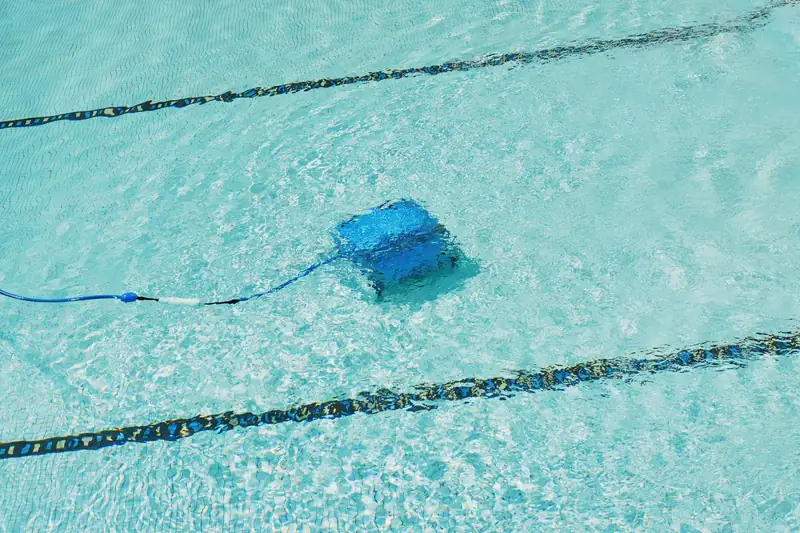
Buying guide
Best Robotic Pool Cleaners for Inground Pools
Pool size rating, coverage, power and filtration, side by side.
-
Buying guide
Best Above-Ground Pool Vacuums and Robot Cleaners
Liner-safe robots and vacuums for frame and vinyl pools, compared on specs.
-

Buying guide
Best Cordless Pool Vacuums (Handheld and Pole)
Runtime, debris capacity and pole fit for quick spot cleaning.
-
Guide
How to Shock a Pool Safely (and When You Need To)
Combined chlorine, the 10x rule, steps and chemical safety, from public-health sources.
-
Comparison
Sand vs Cartridge Filter: Which Is Better for Your Pool?
Backwash or rinse, cost, pump match and pool size, compared.


Get the weekly pool and hot tub checklist
A one-page printable checklist with the CDC water targets and the safety checks to run every week. Free, and sized to stick on the pool shed door.